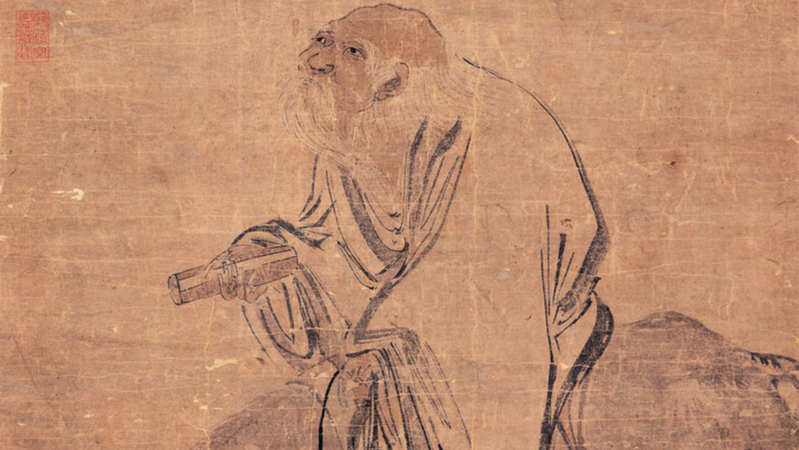
Lao Zi
Introduction
Lao Zi, also known as Lao Tzu, is a legendary figure in Chinese philosophy, widely credited as the founder of Taoism, a cornerstone of Chinese cultural and spiritual life. He is traditionally regarded as the author of the Tao Te Ching, a fundamental text that outlines the core tenets of Taoism. Lao Zi's teachings emphasize living in harmony with the Tao, a concept that represents the fundamental nature and order of the universe. His philosophical ideas have significantly influenced Chinese culture, and their impact extends globally, resonating with people across cultures and eras.
Historical Context
Lao Zi is believed to have lived during the 6th century BC, a time of significant intellectual development in China known as the Spring and Autumn Period (770-476 BC). This era was marked by a proliferation of philosophical thought, including Confucianism and other schools. According to legend, Lao Zi worked as a keeper of the archives at the royal court of the Zhou Dynasty (c.11th century-256 BC). Disillusioned with the moral decay of society, he purportedly left his position to travel westward, where he dictated the Tao Te Ching to a border guard before disappearing from the historical record.
Philosophical Tenets
Lao Zi's philosophy, articulated in the Tao Te Ching, centers around the concept of the Tao (or Dao), which translates to "the Way." The Tao is described as an ineffable force that generates and governs all things. It is characterized by simplicity, spontaneity, and harmony. Lao Zi advocates for a life of wu wei, or "non-action," which encourages individuals to align with the natural flow of the universe rather than resist or dominate it. This principle promotes humility, compassion, and frugality as means to achieve personal and social harmony.
Cultural Impact and Legacy
Lao Zi's teachings have left an indelible mark on Chinese culture and philosophy. Taoism, influenced by his ideas, became one of China's major religious and philosophical traditions, shaping the nation's spirituality, politics, and arts. Lao Zi's thoughts have also permeated literature and art, influencing poets, painters, and calligraphers who sought to capture the essence of the Tao.
The influence of Lao Zi extends beyond China, as his ideas have been embraced by various global philosophical and spiritual movements. His emphasis on simplicity and harmony resonates with modern ecological and minimalist lifestyles. The Tao Te Ching has been translated into numerous languages, allowing Lao Zi's wisdom to inspire people worldwide, fostering cross-cultural dialogues about the fundamental nature of existence.
Modern Relevance
In contemporary times, Lao Zi's teachings continue to offer insights into personal well-being and social harmony. His philosophy provides perspectives on environmental sustainability, encouraging humanity to live in balance with nature. The principles of Taoism also offer alternative views on leadership and governance, advocating for modest, adaptive, and compassionate approaches.
In recent years, scholars and practitioners have reignited interest in Lao Zi's work, exploring its applications in various fields such as psychology, business, and conflict resolution. International symposiums and translations of the "Tao Te Ching" contribute to a growing global appreciation of Lao Zi's contribution to world philosophy.
Lao Zi in Popular Culture
Lao Zi's influence extends into modern popular culture, where his ideas are referenced in literature, music, and art. His teachings have inspired creative expressions that explore themes of balance, nature, and the cosmic order. Artists and musicians draw from Lao Zi's philosophy, integrating ancient wisdom into contemporary contexts to address modern existential and environmental concerns.








